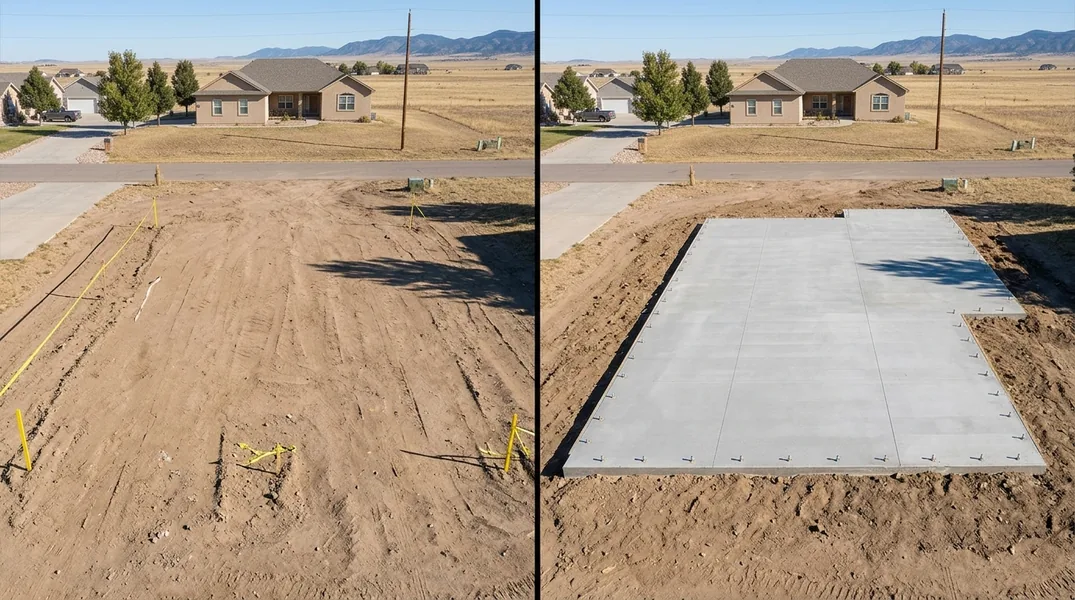
Understanding New Construction Concrete Slabs in Pueblo, Colorado
Buying a new home in Pueblo is an exciting milestone, but it comes with significant responsibility. One of the most critical components of any new construction home is the concrete slab foundation. Unlike older homes with basements or crawl spaces, most new builds in our region rely on concrete slabs as their primary foundation system. These slabs are engineered to support the entire weight of your home and protect it from soil movement, moisture, and temperature fluctuations.
The quality of your new construction concrete slab in Pueblo, Colorado directly affects the longevity and stability of your investment. A properly installed slab will last decades with minimal issues, while a poorly constructed one can lead to cracking, settling, and costly repairs down the road. Before you sign closing papers, it's essential to understand what makes a quality slab, what to look for during inspections, and what warranty protections you should have in place.
What Happens During Builder Foundation Inspection
A thorough builder foundation inspection is your first line of defense against future problems. This inspection typically occurs after the slab is poured but before the framing begins, and again before closing. A qualified inspector will examine the concrete for visible defects, proper slope for drainage, adequate thickness, and correct reinforcement placement. They'll also check that the slab is level and that any control joints (intentional cracks that guide where concrete naturally breaks) are properly spaced.
During the inspection, the professional will look for common issues such as surface spalling (flaking), cracks wider than hairline thickness, soft spots, and improper finishing. They'll verify that the concrete was air-entrained (contains tiny air bubbles for freeze-thaw protection, which is critical in Pueblo West and the surrounding areas where winter temperatures drop significantly). The inspector should also confirm that the builder followed local building codes and that the slab has adequate insulation underneath if required by your local jurisdiction. Don't skip this step. Many homebuyers assume the builder's quality control is sufficient, but independent verification protects your interests.
New Home Foundation Warranty: What Coverage Means
When you purchase a new construction home, your builder should provide a new home foundation warranty. This warranty typically covers structural defects in the foundation for a set period, usually 10 years from the date of purchase. However, warranty terms vary significantly between builders and even between different homes from the same builder. Some warranties are comprehensive and transferable to future owners, while others are limited and non-transferable. Before closing, obtain a copy of your warranty in writing and understand exactly what it covers and what it excludes.
Most foundation warranties cover structural cracks that exceed certain thresholds (commonly 1/4 inch wide or wider), significant settling, and water intrusion caused by structural failure. What they typically do not cover are minor cosmetic cracks, cracks caused by homeowner modifications, or damage from natural disasters or extreme weather events. It's also important to note that many warranties require you to report issues within a specific timeframe. If you notice a crack months or years after closing and haven't reported it, you may lose your right to claim. Keep detailed documentation of your home's condition from day one, take photos, and report any concerns to your builder immediately in writing.
Red Flags to Watch for in New Construction Concrete
Certain warning signs should trigger immediate concern and further investigation before you close on your new home. Large or widening cracks in the slab, particularly those that run diagonally or in multiple directions, can indicate settling or poor installation. Uneven surfaces where you can feel a step or slope when walking across the slab suggest the concrete may have settled unevenly or was not finished properly. Staining or discoloration, especially near corners or edges, can indicate moisture problems or poor concrete mix quality.
Pay special attention to the perimeter of the slab where it meets the foundation walls. This area is vulnerable to water infiltration and should be sealed properly. If you see gaps, cracks, or evidence of water staining in the basement or crawl space, these are serious red flags. Additionally, check the grading around your home. The soil should slope away from the foundation on all sides to direct water away from the slab. If the grading is flat or slopes toward the house, water will pool against the foundation, leading to moisture problems and potential structural issues. If you spot any of these concerns, hire a professional inspector and request that the builder address deficiencies before closing.
Working with Local Professionals for Post-Closing Maintenance
After you close on your new home in Pueblo, your slab will need ongoing care to maintain its integrity. Minor cracks and surface damage can be addressed through Concrete Repair and Resurfacing services before they become major problems. Sealing your slab every few years protects it from moisture, salt, and UV damage. If you have exterior concrete features like Concrete Driveways or Concrete Patios, these should also be sealed and maintained regularly to extend their lifespan.
Pueblo Concrete specializes in helping homeowners protect their concrete investments. Whether you need to address existing damage or establish a preventive maintenance plan, the team can provide expert guidance tailored to Pueblo's climate and soil conditions. Regular maintenance is far less expensive than major repairs or foundation replacement, and it preserves your home's value. If you're concerned about your new slab's condition or want to schedule a maintenance assessment, contact Pueblo Concrete at (719) 467-2256 for a free estimate.
Final Steps Before Closing on Your New Home
As closing day approaches, create a detailed checklist of foundation and concrete slab items to verify. Walk through your new home with your real estate agent, your home inspector, and ideally a concrete specialist. Take photos and video of the entire slab, including the garage, basement, crawl space, and exterior perimeter. Document the condition of every visible surface. Ask your builder for copies of all concrete testing reports, mix designs, and installation records. These documents prove the slab was installed to specification and provide valuable reference material if issues arise later.
Don't let excitement about moving into your new home overshadow due diligence on the foundation. A concrete slab is the literal foundation of your investment, and it deserves careful attention. If you have any doubts about the quality of work or want a professional opinion before closing, reach out to experienced local contractors. Pueblo Concrete can provide guidance on what to look for and what questions to ask your builder. Call (719) 467-2256 today to discuss your new home's concrete foundation and ensure you're making an informed decision at the closing table.
Looking for a professional concrete contractor in Pueblo? Pueblo Concrete responds fast for all your concrete needs.
Get a Free QuoteOur services: Concrete Driveways · Concrete Patios · Stamped & Decorative Concrete